




Fun Day Friday · Product ethics
Near victory — same dopamine as winning
Story time: when you're so close to winning a jackpot, your brain releases the same dopamine as if you won. That insight can help us hit our goals — or be used against us.
A near victory triggers the same response as a win.

Today I want to share a research insight that can be used for us — or against us.
It was first discovered in slot machine studies. When you were so close to winning the jackpot, it triggered the same dopamine response as if you were winning. That's why the players keep going, to try again.
Every progress bar runs some version of this.

Now you probably see some version of this in every product we use that has a progress bar, a spinner, or a percentage.
85% closed. The goal was already yours.

Use it well, and it helps us achieve the goal and close the loop. Do you feel the urge to complete the run when your fitness ring shows 85%?
The number is factual.

Another example: when you see yourself at 90% of your savings goal, you'll probably spend a bit less and save more to kick the goal. And doesn't it feel good when you donate, and you can see the charity hitting closer to 100%? They all work well for us because they just make the goals we already want more visible.
Now the other version.

Now, the same insight can be applied to take advantage of us.
The ceiling is fixed. No matter how you spin.
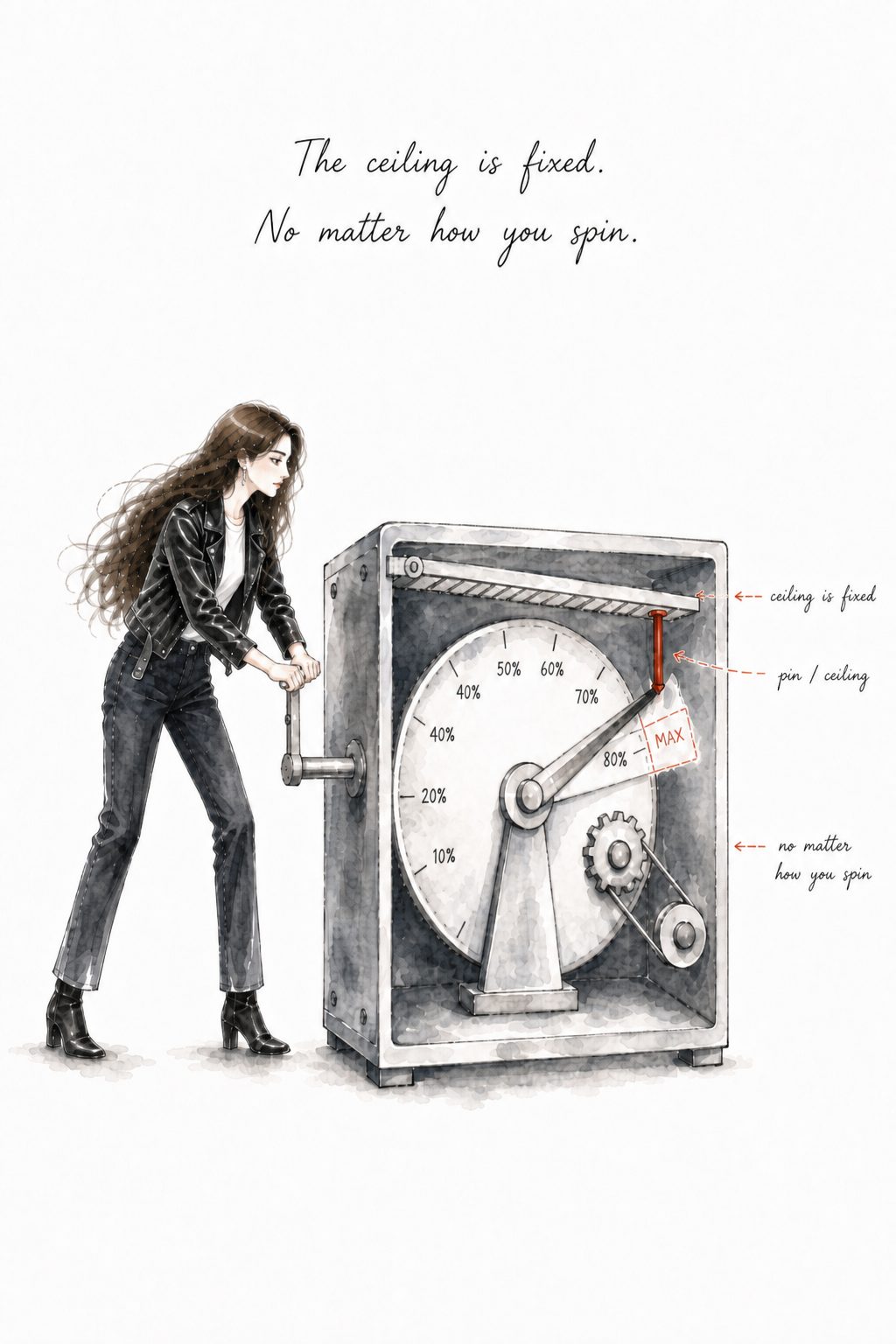
For example: have you seen this discount spinner on an e-commerce site? You spin, you were so close to the biggest prize, then you went back into the app looking for another win — and ended up buying more than you need. But did you know that near victory was manufactured, so you couldn't get the biggest prize anyway?
The platform chose which fields count.

Another example: near victory used to benefit the other party. Did you notice you're sometimes asked irrelevant questions in onboarding, at 90% complete — and you were so close to finishing that you might just give in? You might not have realised the platform designed that proximity to 100%, and you don't have a say in what the missing 10% is.
The line is who set the goal.
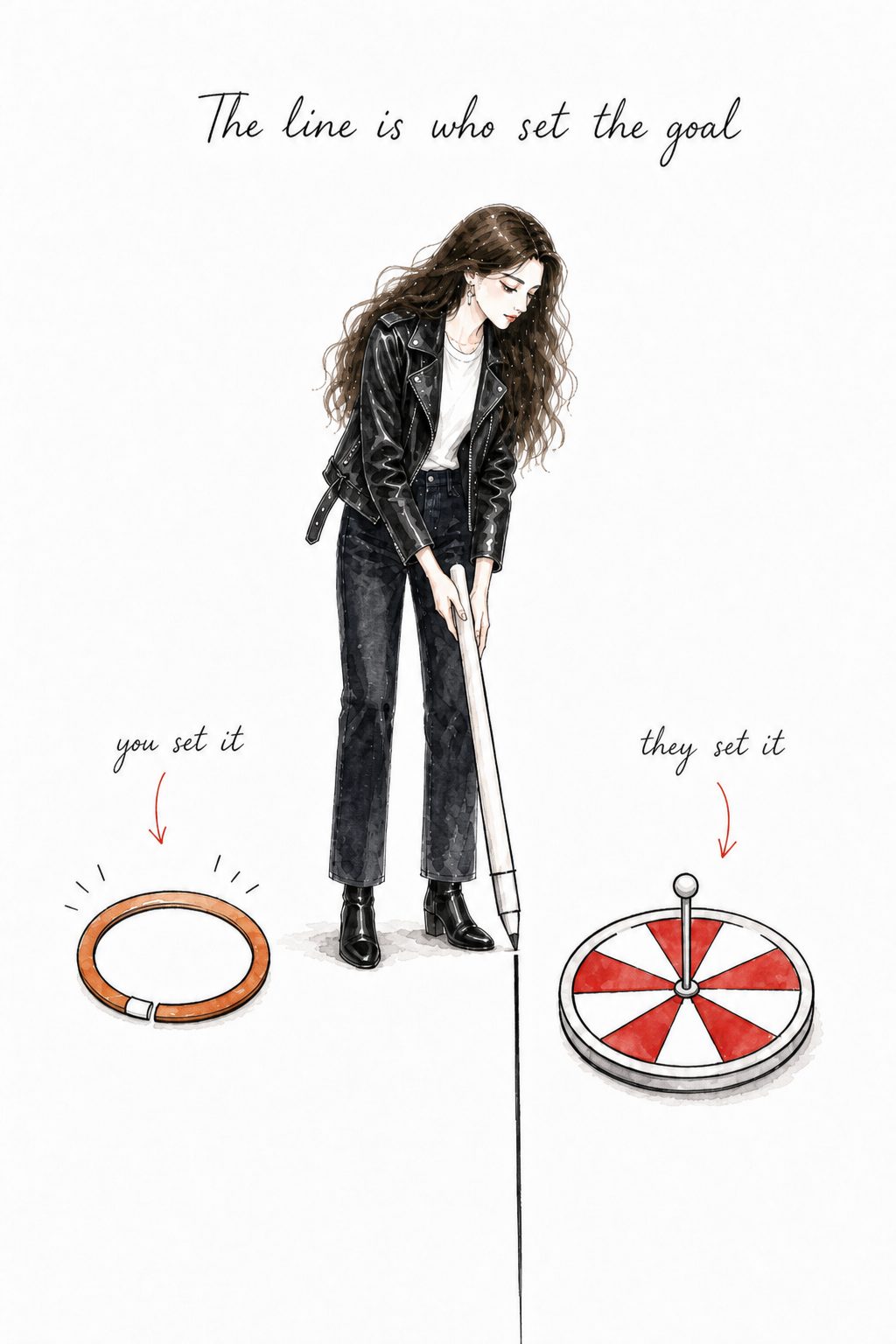
Whether this is a good or bad thing for us is not about the emotional intensity. The difference is who set the goal.
If the user set it, near-victory signaling reports real progress toward something they already want. If the platform set it without the user's goal in mind, the same signal extracts attention or spend — while wearing the same shape of encouragement.
If you set it, it's real. If they did, you're being spun.

The good news is the dark pattern decays. Research shows the more you pull the same tricks, the more users learn the pattern. So leaning too hard on near victory like this triggers backlash, or even regulation.
In contrast, genuine progress signals don't decay the same way — because nothing is manufactured, and the number is factual.
If you're designing with gamification, think ethically — apply the insight for the benefit of your users.